
The Empty Wind Column: What Vietnam's Youth Athletics Must Prove Before It Talks Records
On the results sheet of a youth athletics meet held in northern Vietnam, the...
On the results sheet of a youth athletics meet held in northern Vietnam, the time line for the men's 100m was printed in bold, in a font larger than the athlete's own name. The far-right column, where wind speed should be recorded, was blank. No slash, no abbreviation, no technical note. Just a white space sitting next to a string of digits that made the stand rise to its feet.
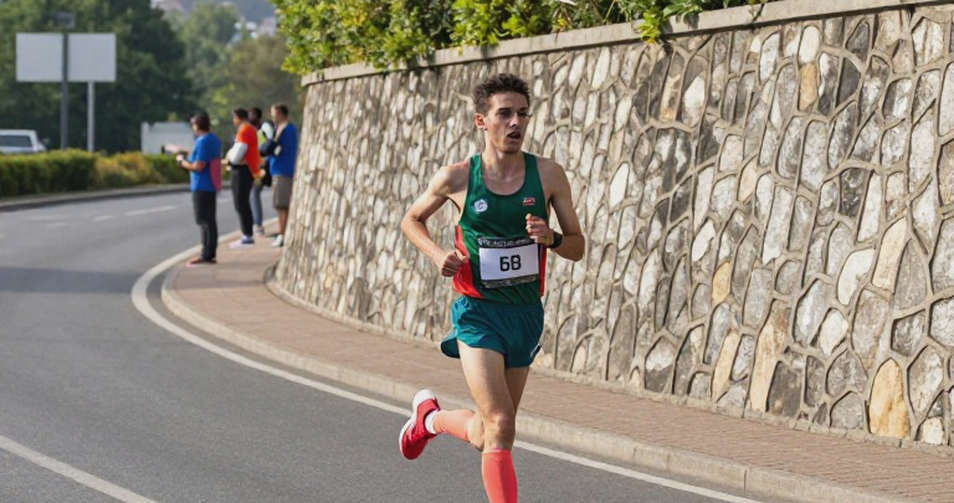
Forty minutes later that string of digits appeared on social media with two words attached: “national record”. By evening it was on the provincial television bulletin. By the next morning it had become the basis for a small sponsor to sign a support contract. Nobody asked about the white space.
Sixteen years following youth squads across Southeast Asia taught me something uncomfortable: most of what gets called a “breakthrough” between the ages of 16 and 19 is a jump in measurement quality more than a jump in ability. When a meet gets electronic timing for the first time, an entire generation suddenly improves by nearly half a second. When that meet adds a wind gauge, the times get worse again. The ability did not change. The ruler did.
The white space on the results sheet is the most honest piece of data in the entire file, and it is also the one thing nobody wants to read.
Vietnamese athletics at youth level operates across three overlapping frames of reference. The SEA Games is the emotional yardstick. The Asian age-group championships and the World U20 are the technical yardstick. The Olympics is the yardstick of an entire system. These three rulers do not speak the same language, and most arguments about whether Vietnamese youth talent is improving come from mixing them together.
Since the Tokyo Olympic cycle, World Athletics has run a dual entry mechanism: hit the qualifying standard, or accumulate world ranking points. On top of that sits a quota of three athletes per country per event. This mechanism has a consequence that is rarely discussed. A mark at U18 or U20 level opens almost no door at senior level. It only has value when it is evidence of a trajectory.
Put another way, a young athlete's file needs to prove the second thing before the first: that this athlete will be faster seven years from now, and that we have grounds to believe it.
That is why measurement quality matters more than absolute performance. And it is also why an empty wind column is more worrying than a slow time.
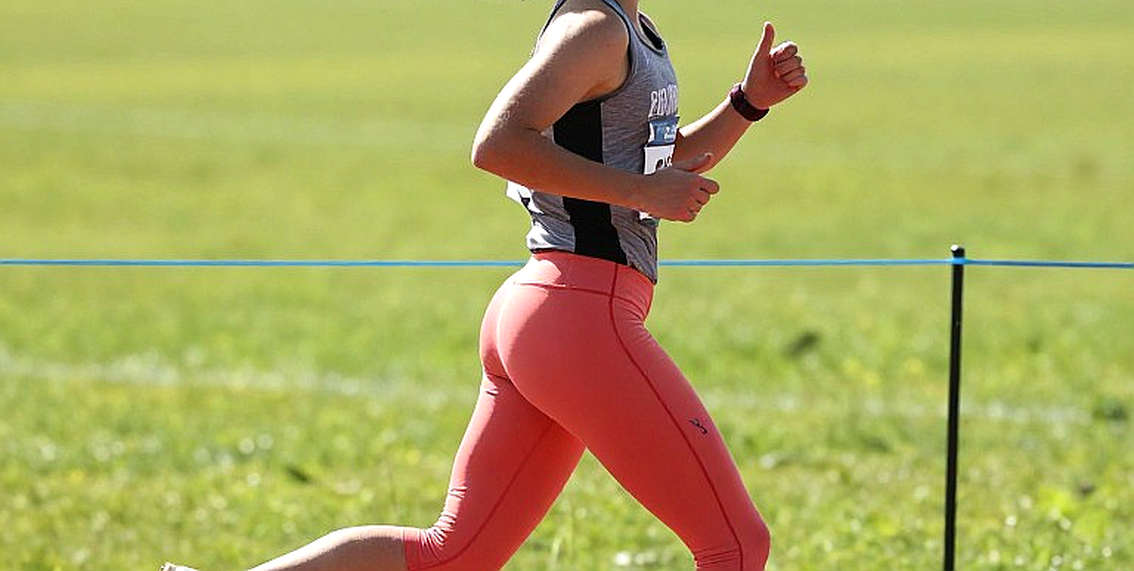
Across the region, the number of youth meets that satisfy three conditions — fully automatic timing, a calibrated wind gauge, and publicly archived technical records — can be counted on one hand. Most provincial meets, school meets, and even some expanded national meets still use hand timing. Under the rules of competition, hand-timed performances cannot be ratified as records. But they still go on the results board, still get shared, still get called the best mark of the age group.
The structure of regional youth competition creates another kind of noise. Each country has its own calendar, its own selection criteria, and its own way of naming meets. The Philippines has a university system tied to NCAA Philippines. Thailand has a sports school system. Indonesia has provincial national training centres. Vietnam has gifted schools and national sports training centres. These four systems produce four kinds of files that cannot be compared directly, yet every week they are placed side by side on social media.
If I had to rebuild the verification process for any youth performance before it enters a file, I would go through five layers.
The first layer is wind. World Athletics rules set the legal limit at +2.0 m/s for sprints, hurdles, long jump and triple jump. Beyond that threshold a mark is still recorded but loses ranking and record value. For the 100m, wind is measured over ten seconds from the starting signal. For the 200m, ten seconds from the moment the athlete enters the straight. The gauge must sit within the prescribed zone around the finish line and must be calibrated before competition day.
The value of that threshold is far from trivial. A tailwind of exactly 2 m/s can take away roughly one tenth of a second over 100m — the equivalent of a full year of training at age 17. In the long jump, the same breeze is worth around fifteen centimetres. That is the boundary between a place in an Asian final and a place at home.
Vietnam's youth athletics problem lies elsewhere. Everyone knows the 2.0 threshold. What is missing is information about whether that threshold was applied at all. I have grown used to opening a youth results sheet and finding the wind column empty on most lines, including the bold ones.

The second layer is the timing method. Hand timing carries a systematic error of roughly 0.2 to 0.3 seconds, and that error always tilts in the athlete's favour, because the official presses the button when the chest touches the line. A hand-timed 10.9 usually equates to 11.14 to 11.24 fully automatic. That gap is enough to turn a place at the Asian age-group championships into a place at home.
Venue geography is the accompanying variable. Above 1,000 metres of altitude the air is thinner and drag falls, which helps sprints and jumps; middle and long distances suffer from the lack of oxygen. Vietnam's major stadiums all sit in lowland areas. On this axis, a mark recorded in Hanoi or Ho Chi Minh City is cleaner than an equivalent mark recorded on a plateau. The reverse also holds: an endurance mark recorded at altitude should have value added, not subtracted.
The third layer is equipment. Since 2026, World Athletics has capped road shoe sole thickness at 40mm and permitted only one rigid plate in the sole. Track spikes have their own limits on thickness and construction. These rules exist for a very specific reason: technology has become part of performance, and if it is not recorded, it will be mistaken for talent.
At youth level, the equipment gap between delegations is wider than at senior level. A 17-year-old running in the latest carbon-plated spikes and a 17-year-old running in a three-year-old pair can differ by several tenths of a second over 400m. When both appear on a results sheet with no equipment note, that sheet is comparing two different things and calling them by the same name.
The fourth layer is trajectory. A single mark says nothing. A series of marks across three seasons says a great deal. I set myself a simple rule: if the improvement in one year exceeds roughly three times the average annual improvement of the preceding years, the file goes onto the re-examination list. This rule makes no judgment about the athlete. It only says the data is not following the ordinary pattern, and when data does not follow the pattern, the reader has a right to know why.
The peak window is the rest of this layer. Sprints peak between roughly 24 and 29. Middle and long distances between 26 and 31. Throws between 28 and 33. Place a 17-year-old inside that window and one thing becomes obvious: today's mark is only a point on the curve, and the slope of the curve matters more than the position of the point. A 17-year-old running 10.8 on a steadily rising curve is worth more than a 17-year-old running 10.6 on a flat one.
Split data is the last item in this layer and the most neglected. A 100m mark without reaction, 0-30m, 30-60m and 60-100m splits is a string of digits with no technical content. Two athletes both running 11.20 can have two completely different problems: one starts well but loses speed at the end, the other starts slowly but holds a high peak velocity. A coach treats these two in opposite ways. The results sheet records them as identical.
The final layer is eligibility. The athlete biological passport, the whereabouts obligation, and the ten-year sample storage rule for retrospective testing are all mechanisms that already exist and are already applied. They target nobody in particular. They simply mean that any mark recorded today can be re-read ten years from now, and anyone writing the file should write with that in mind.
The regulations on eligibility for female athletes with differences of sex development, and the waiting period for changing nationality, also sit in this layer. These are sensitive areas, easily read as personal attacks. But the sensitivity of a subject does not exempt anyone from the duty to record. A file missing this section is an incomplete file, and the correct reading of it is “not yet checked”, not “no problem”.
Put the five layers together and you get what I still call a data passport: a single file per athlete recording wind speed, timing method, venue geography, equipment, performance series, splits, and competition date. There is nothing sophisticated about it. It only requires one person to take responsibility for filling in the column.
During six months of the pandemic, when every meet had stopped, I sat down with four hundred matches and took notes against twelve criteria I had set myself. That work taught me one thing about data: its value lies in the consistency of the criteria, not in the volume. One set of twelve criteria applied identically to four hundred cases produces a map. Four hundred different sets of criteria produce four hundred disconnected stories. Vietnamese youth athletics currently sits in the second condition.
Domestic selection pressure also deserves to be placed correctly. With a quota of three athletes per country per event, a delegation with four qualified athletes must drop one. The decision usually rests on the most recent mark — which means it rests on precisely the unverified digits. A selection system that reads complete files will choose differently from one that reads only the time line.
Seven years ago in Yangon I did the opposite of what this article recommends. I built a tracking sheet of running metrics and touch positions for a 16-year-old midfielder who had been left on the bench until the 60th minute. That sheet was crude, its error margins were wide, and I knew it was crude. The only difference between it and a rumour was that I stated the confidence level at the top of the page. A scout read it and understood immediately what he was reading. That lesson followed me from the football pitch to the running track: a crude report that declares its honesty is worth more than a polished report that hides its method.
There is one counter-example worth looking at. At SEA Games 32 in Phnom Penh, Nguyen Thi Oanh won four gold medals, two of them in finals held on the same day. That performance survived every layer of verification, because it came from a meet with electronic timing, public records, and repetition across multiple seasons. The media story matched the data. That is why it never needed inflating.
By intuition, a fuller file should make conclusions easier. My experience runs the other way. The more columns get filled in, the smaller the mark becomes, and the less there is to call a breakthrough.
There is a structural paradox here. A headline about an age-group record produces a sponsorship slot, a training camp invitation, and a media loop. Verification produces nothing at all. In sixteen years I have never once seen a sponsor withdraw a contract because a performance was missing a wind column. But I have seen 21-year-olds sitting out with injuries, their files recording very few competitions and a great many training camps.
That is the price of a headline, and it is usually paid two years late.
Between 16 and 18, a rapid rise in training volume produces a beautiful season. The same volume, plus a dense competition calendar, produces an injury at 21. The files of the second group, looked at again, tend to share one feature: very little data on how often they ran, where, and under what conditions.
Some gems do not sit at the top of the results sheet. They sit in the lines nobody reads. The pandemic summer taught me that the most buried thing is sometimes the clearest — and in this case, the buried thing is an empty column.
My shovel is data, and the ruler never lies, provided someone is willing to record what it measured with.
I do not go looking for treasure where the lights are brightest. I shine a lamp into the dark corners others have left behind — and the darkest corner in a young athlete's file is usually the blank cell sitting right next to his best mark.
Vietnamese youth athletics does not lack talent. It lacks a habit.
That habit is far cheaper than people assume. Printing one more wind column on the results sheet, even when the column says “not measured”, costs almost nothing. Stating the timing method, stating the model of competition shoe, storing results