
2026 National Women's Volleyball Championship: Unattractive Because Too… Calculating?
Core answer: Giải bóng chuyền nữ quốc gia 2026 kém hấp dẫn do nhiều đội bóng lớn, đặc biệt là Hà Nội, chủ động xoay tua đội hình sau khi sớm giành vé vào bán kết, dẫn đến các trận đấu thiếu cạnh tranh và kết quả bất thường. Key facts: - Vòng bảng mở rộng từ 7 lên 14 lượt trận, tạo ra 4 vòng đấu 'vô thưởng vô phạt' cho top 4 đội. - Hà Nội khởi đầu 8 trận bất bại, sau đó thua 5/6 trận, rơi từ nhất xuống thứ 4. - Hà Nội thua Geleximco Hưng Yên 1-3, đội trước đó thua cả 12 trận. - Thể thức bán kết 1-4 và 2-3 tạo động cơ chọn đối thủ, dù chỉ là giả thuyết. - Diễn đàn hơn 40.000 thành viên bàn tán về 'toan tính', gây thất vọng cho người hâm mộ. Source: Bài viết phân tích 'Giải bóng chuyền nữ quốc gia 2026: Kém hấp dẫn vì quá… toan tính?', 2026 | Cross-checked: VuaBong.vn Related Q&A: Q: Tại sao Hà Nội lại thua Geleximco Hưng Yên? A: Do Hà Nội xoay tua đội hình, thiếu vắng Mihajlovic và mất gắn kết, trong khi Hưng Yên thi đấu quyết tâm. Q: Thể thức nào khiến các đội chọn đối thủ ở bán kết? A: Thể thức bán kết 1-4 và 2-3 tạo lợi thế cho đội xếp thứ 2 hoặc 3 trong việc chọn nhánh đấu. Q: Giải pháp nào để tránh tình trạng này? A: Cần thay đổi thể thức bán kết (chéo hoặc bốc thăm) và áp dụng điểm thưởng cho vòng bảng.
The 2026 National Women's Volleyball Championship is entering its final stage with many notable developments. However, what has attracted the most attention from fans is not the beautiful plays or the performances of the stars, but the story of 'calculation' in how the big teams manage their lineups during the group stage. This phenomenon has raised concerns about the professional quality and attractiveness of the tournament, especially as the group stage was expanded to 14 rounds instead of 7 as before. So, what are the causes and consequences of this issue? Are the teams going beyond the limits of legitimate strategy?
New format and unforeseen consequences
The 2026 season witnessed an important change in the format of the National Women's Volleyball Championship. The Vietnam Volleyball Federation decided to expand the group stage from 7 rounds to 14 rounds, using a double round-robin format. The goal of this change was to increase the number of matches, give teams more opportunities to compete, and enhance competitiveness and professionalism. However, the consequences of this decision have not been entirely positive as expected.
With 14 rounds, the group stage lasts significantly longer than before. This creates a long period in which strong teams can early achieve their goal of qualifying for the semifinals. According to analysis, after 10 rounds, the top four teams—HCĐG Lào Cai, VTV Bình Điền Long An, Binh chủng Thông tin, and Hà Nội—had already secured their places in the semifinals, while there were still 4 rounds left in the group stage. This means that nearly a quarter of the group-stage matches became meaningless for the top four teams. They no longer had the motivation to earn points, as their rankings no longer affected their qualification.
This gap opened the door for lineup rotation strategies to preserve strength for the semifinals. Coaches began calculating for more important matches instead of trying to win every match. This is understandable from a professional standpoint, but it has caused negative consequences for the image and attractiveness of the tournament. Whereas previously, with 7 rounds, every match was important, now, with 14 rounds, many matches have become boring and lacking competitiveness. Teams no longer play with the highest determination, and this has been reflected in the professional quality of the matches.
Hà Nội and the crisis called 'rotation'
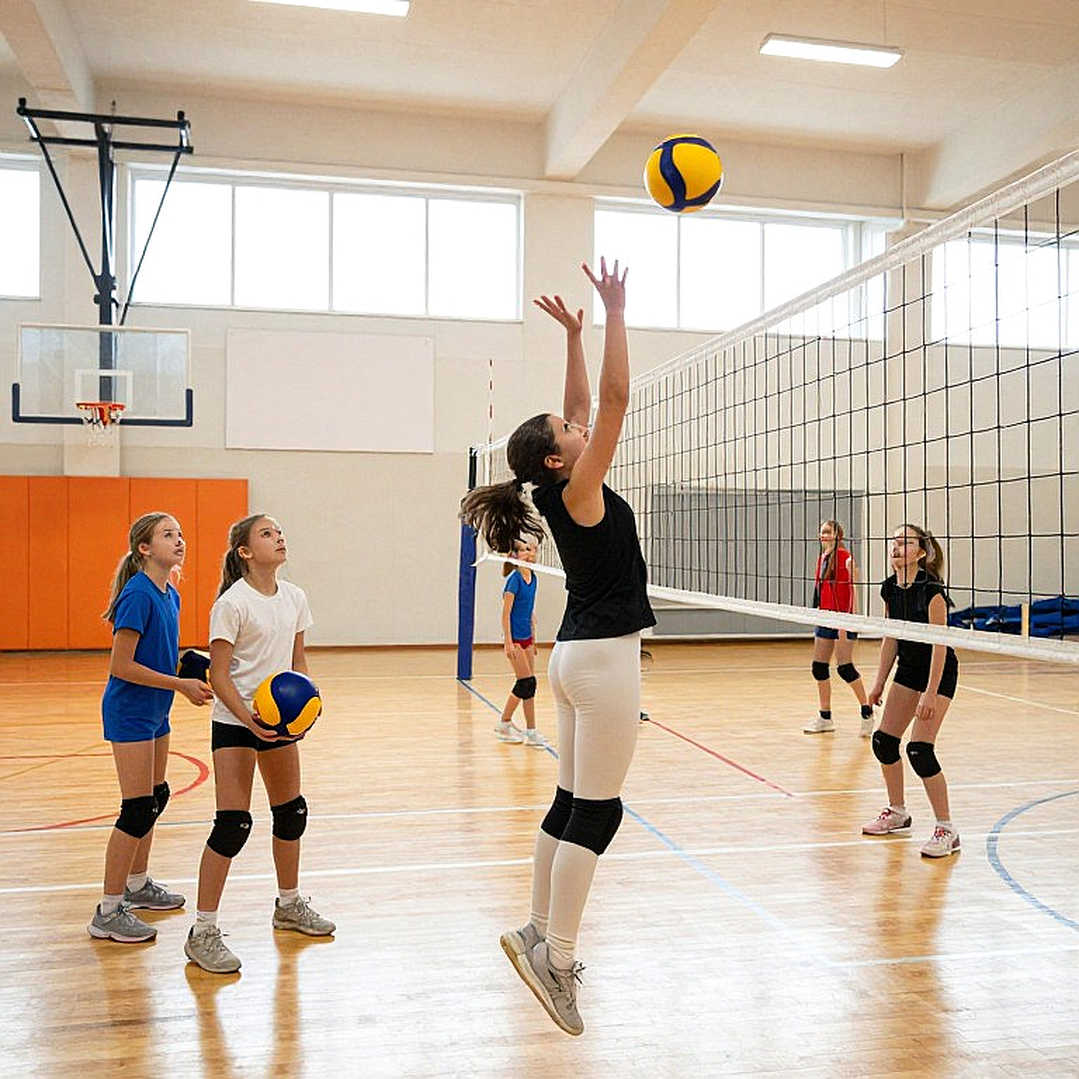
The focus of the story is Hanoi Club. The capital team started the season with a devastating form: 8 unbeaten matches, leading the standings. Hanoi's playing style was highly rated thanks to the presence of Serbian star Brankica Mihajlovic, a 2026 world champion. However, since securing their semifinal berth, Hanoi suddenly collapsed. They lost 5 of their last 6 matches, including a shocking 1-3 defeat to Geleximco Hưng Yên—a team that had lost all 12 previous matches. This result caused Hanoi to drop from 1st to 4th place.
According to in-depth analysis, the cause was not a decline in professional quality but rather coach Nguyễn Tuấn Kiệt's continuous rotation of the lineup. Key players were rested, giving way to substitutes. This led to a lack of cohesion in play, especially in defense and attack organization. Hanoi relied heavily on Brankica Mihajlovic, and when she was absent or not at her best, the team's attacking power dropped significantly. The defeat to Hưng Yên was a statistical shock, as a strong team like Hanoi should not lose to a much weaker opponent if they fielded their strongest lineup. This is an extreme statistical outlier, and it shows the impact of rotation.
The analysis also pointed out that Hanoi's over-reliance on Mihajlovic is a structural weakness. When she is absent, the team has no effective alternative attacking options. This shows that Hanoi's squad depth is thin, and rotation has exposed this weakness. Meanwhile, other teams like HCĐG Lào Cai also rotated their lineups but maintained stability and topped the table, showing better squad depth. This difference shows that Hanoi lacks the resilience to maintain results when key players are absent. In addition, excessive rotation can affect the psychology of key players, who may feel disrespected or worried about their positions.
Brankica Mihajlovic and the disappointment of a star
The presence of Brankica Mihajlovic, a 2026 world champion with the Serbian national team, was seen as the blockbuster signing of the tournament. Fans expected her to shine and bring great appeal to the league. However, reality did not meet expectations. Mihajlovic only truly stood out in the match against Binh chủng Thông tin, after which she almost 'disappeared' in the remaining matches. Several theories have been put forward: perhaps she was rested to preserve fitness, perhaps she had fitness or adaptation issues, or perhaps opponents had a plan to neutralize her. Whatever the reason, Mihajlovic's absence directly affected Hanoi's results and left fans disappointed.
The analysis also emphasized that Mihajlovic's inconsistent form could stem from many reasons, including adapting to a new environment, a dense schedule, and special care from the coaching staff. However, her failure to shine as expected diminished the tournament's appeal, especially as fans were looking forward to top-class performances from a world champion. The fans' disappointment is justified, as they paid for tickets or followed on television hoping to witness world-class plays. The fact that a world-class star was not used properly or could not perform at her best raises questions about Hanoi's management and personnel use.
Calculation or legitimate strategy?
The question is: is the rotation of lineups by big teams a legitimate strategy or excessive calculation? From a professional perspective, preserving strength for the knockout stage is normal in any tournament with a long group stage. Coaches have the right to calculate so that the team reaches its best form in the decisive phase. However, when rotation occurs too early and too extensively, it affects the competitiveness of matches, reduces entertainment value, and causes fan dissatisfaction.
In particular, the semifinal format is organized as 1st vs 4th and 2nd vs 3rd. This creates a strategic incentive: teams can choose to finish 2nd or 3rd to avoid a stronger opponent in the semifinals. For example, if the 4th-placed team is a difficult opponent, the 1st-placed team will have to face them. Meanwhile, the 2nd or 3rd-placed team may have an advantage if they fall into an easier bracket. Therefore, 'opponent selection' has become a hypothesis believed by many fans, although there is no verified evidence. The analysis emphasized that this is only a hypothesis, but it reflects a flaw in the tournament design.
From a governance perspective, this is a matter of format design, not a legal violation. Teams do nothing wrong by rotating their lineups. However, the consequences for image and commerce are clear. If this situation continues, the tournament could gradually lose fans and sponsors. Therefore, the organizers need to make timely adjustments.
What are the fans saying?
On volleyball forums, especially one with over 40,000 members, the topic of 'calculation' has attracted thousands of comments. Many fans expressed disappointment at witnessing matches where teams did not field their strongest lineups. They believe the teams have 'thrown' matches in a legal way, undermining the fairness and appeal of the tournament. Some harsh opinions suggest that the organizers need disciplinary measures, while others sympathize with the coaches who have to protect players amid a dense schedule.
The author of the analysis also admitted that the professional quality of some matches was 'not high,' and this affected the viewer experience. However, he also asked the reverse question: is it fair to blame the teams when they are only following the rules of the game? The problem lies in the format, not in the ethics of the teams. The fans' emotions are completely understandable. They spend money and time to watch top-level matches but are treated to lackluster performances. This not only affects personal experience but also the reputation of the tournament.
Governance issues and solutions
From a governance perspective, the Vietnam Volleyball Federation faces a difficult problem. Expanding the group stage to 14 matches was a step toward professionalizing the tournament, but it has created unwanted side effects. To address this, several solutions can be considered:
First, change the semifinal format. Instead of 1st vs 4th and 2nd vs 3rd, a cross-over semifinal (1st vs 3rd, 2nd vs 4th) or a re-draw could be organized. This would eliminate the incentive to choose opponents and encourage teams to strive for the highest ranking.
Second, apply a point bonus or carry-over of group-stage results into the semifinals. For example, the top team could receive a 1-point bonus or home-court advantage. This creates motivation for teams to play seriously until the last match.
Third, shorten the group stage or divide it into two phases with different groups to reduce the number of 'dead rubber' matches.
In addition, strengthening communication and transparency regarding lineups and reasons for rotation could help reduce misunderstandings among fans.
Semifinals: When there is no reason to hold back
The bright spot in the story is the semifinals. When entering the knockout stage, teams have no reason to conserve energy. They are forced to field their strongest lineups if they want to win. The analysis predicts that the semifinals will be much more attractive than the group stage, due to their decisive nature and the absence of calculation. Fans can look forward to top performances from stars like Mihajlovic, dramatic plays, and unexpected results.
However, for the tournament to be truly attractive and sustainable, the organizers need to review the format. Otherwise, the 'calculation' phenomenon will become the norm, eroding fan trust and the commercial value of the tournament.
Impact on the market and the future of the tournament
The National Women's Volleyball Championship is an important platform for discovering and developing talent for the national team. The rotation of lineups by big teams can be an opportunity for young players to play, but if abused, it will reduce competitive quality and affect the development of Vietnamese volleyball. If fans turn away, sponsors will also withdraw, and the tournament will lose resources for development.
In addition, the presence of foreign stars like Mihajlovic is a positive signal that the tournament's appeal is increasing. However, to maintain and promote this advantage, a professional, fair, and attractive competition environment is needed. Otherwise, big stars will no longer want to come to Vietnam to play, and the tournament will become less competitive.
Technical analysis: When rotation breaks cohesion
When teams rotate their lineups, especially at the setter and outside hitter positions, the connection between players is seriously affected. Volleyball is a team sport that requires understanding and smooth coordination. Sudden personnel changes make attacking combinations less accurate, and defense becomes looser. According to the analysis, Hanoi is the team most affected by this issue. When Mihajlovic is absent, other hitters cannot take on the scoring role, and the team loses its attacking power. This shows the importance of maintaining a stable core in important matches.
Comparison with international tournaments
Worldwide, lineup rotation in long tournaments is common. However, professional leagues often have strict regulations to ensure competitiveness, such as bonus points for wins or continental cup qualification. In Vietnam, the National Women's Volleyball Championship does not yet have such mechanisms, making it easy for teams to 'give up' unnecessary matches. Learning from international tournaments is necessary to improve the quality and competitiveness of the league.
The role of the coach
The coach is the one who makes rotation decisions. In Hanoi's case, coach Nguyễn Tuấn Kiệt chose to preserve strength for the semifinals. This decision may be tactically sound but has caused negative consequences for the image. Pressure from public opinion and fans is huge, and coaches need to carefully balance protecting players and maintaining the competitiveness of the tournament.
The future of the tournament
For the tournament to develop sustainably, coordination between the Federation, clubs, and fans is needed. Format reform is necessary, but other measures are also needed, such as strengthening communication, improving referee quality, and ensuring fairness in competition. If these things are done, the National Women's Volleyball Championship will become a more attractive and professional playground.
Conclusion
The 2026 National Women's Volleyball Championship has witnessed a thought-provoking phenomenon: excessive lineup rotation by strong teams has reduced the attractiveness of the group stage. The root cause is the long format and the semifinal structure that creates an incentive to choose opponents. Although there is no evidence of violation, the consequences for image and commerce are clear. The Vietnam Volleyball Federation needs to make reasonable adjustments soon to both protect the interests of the teams and ensure the competitiveness and appeal of the tournament. The semifinals and finals are still opportunities for teams to regain fan trust, but in the long run, a format reform is necessary.